


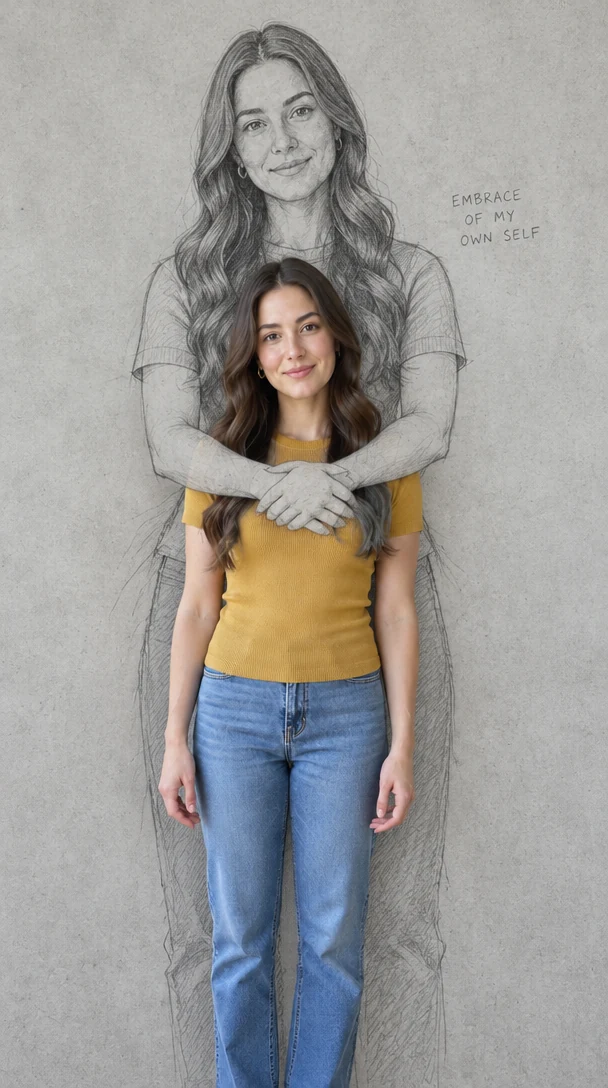
 Self-hug sketch
Photo used
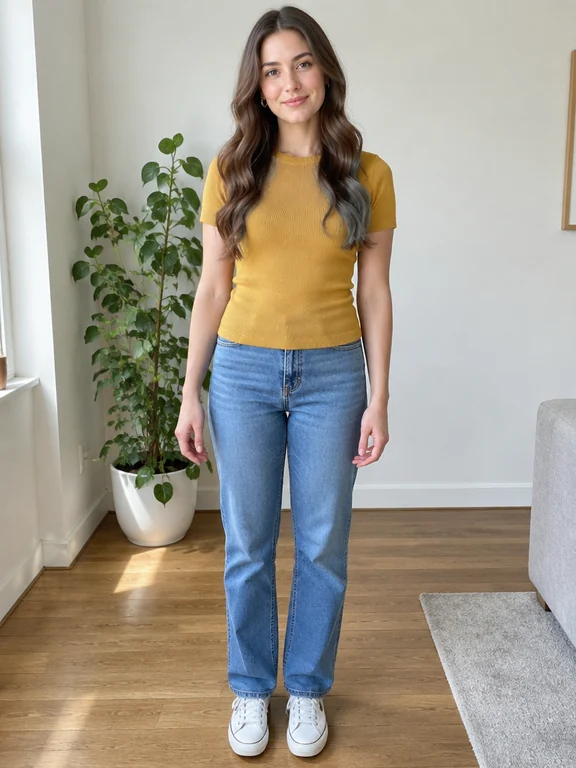
Your photo
Her own face, her own outfit
Her hair, freckles and mustard top stay hers, in her own colours, while the wall gets a pencil drawing of the same woman and the drawn hands cross in front of her chest.
Upload one photo and make a self hug AI photo: you in full colour, held from behind by a giant pencil drawing of yourself on a grey wall. No prompt, no drawing of your own.
PNG / JPG / WebP · up to 10 MB · at least 512px on the short side
0/1 photos
One person with the face clear: a half-body or full-body photo keeps your own outfit and shoes. No posing needed.
Photo settings
No prompt needed. Only upload photos of yourself or people who agreed to be featured; celebrity photos and film stills aren't allowed.
Self Hug Sketch makes one photo into a portrait of you in full colour, held from behind by a much larger pencil drawing of the same person on a plain grey wall. The drawing carries your own face, hair and clothes in graphite, and its drawn arms come around you in a hug.
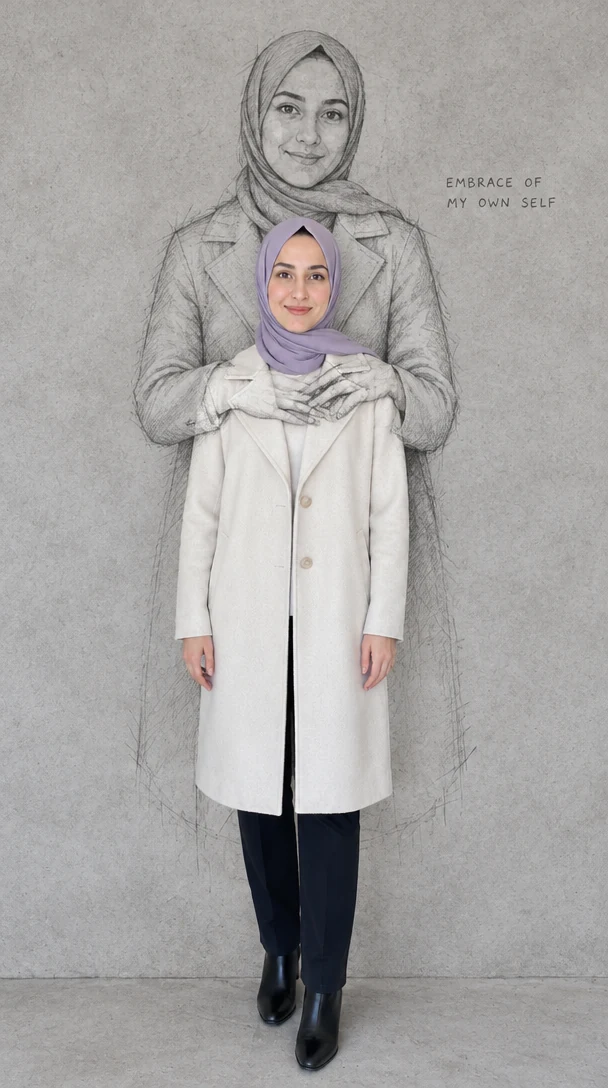
The line on the wall gives the picture its other names. Posts caption it Embrace of my own self, and the CapCut template is called Hug from my own self; both mean my own hug of myself — you in colour in front of a pencil drawing of you — and both searches land on this page.
The wider name hug yourself AI covers a family of pictures: couple hugs, a self-hug pose, animated hugs that move. This page answers the still version, where the second figure is a drawing on the wall.
A third neighbour is the drawing reference: searches for a self-hug sketch pose to copy by hand. That is a sheet of poses for an artist, not a generator, and this page does not draw one.
The picture works because nothing is invited in: the one hugging you is you, in pencil. That is also why a clean single-person photo matters more here than any prompt.
@coach__lea posts an early version of the picture: a coloured photo of her sitting against a wall, with a large pencil drawing of herself behind her and a note on pulling the prompt out of the picture.
The CapCut template AI HUG MY OWN SELF is live; it showed 27,612 uses and 156,013 plays when it was read on 17 November 2026.
@rkvugcez posts an Indonesian tutorial for the same drawing, made from one photo, and points at the CapCut template.
@isolde3292 posts a Spanish tutorial named El abrazo de mí mismo, made from one photo, the same drawing of yourself.
Sources: the TikTok posts and the CapCut template above, read on 17 November 2026.
Two photos through the same template, then two close crops. The captions say what stays yours and what the template draws in.
Self-hug sketchPhoto used
Her hair, freckles and mustard top stay hers, in her own colours, while the wall gets a pencil drawing of the same woman and the drawn hands cross in front of her chest.
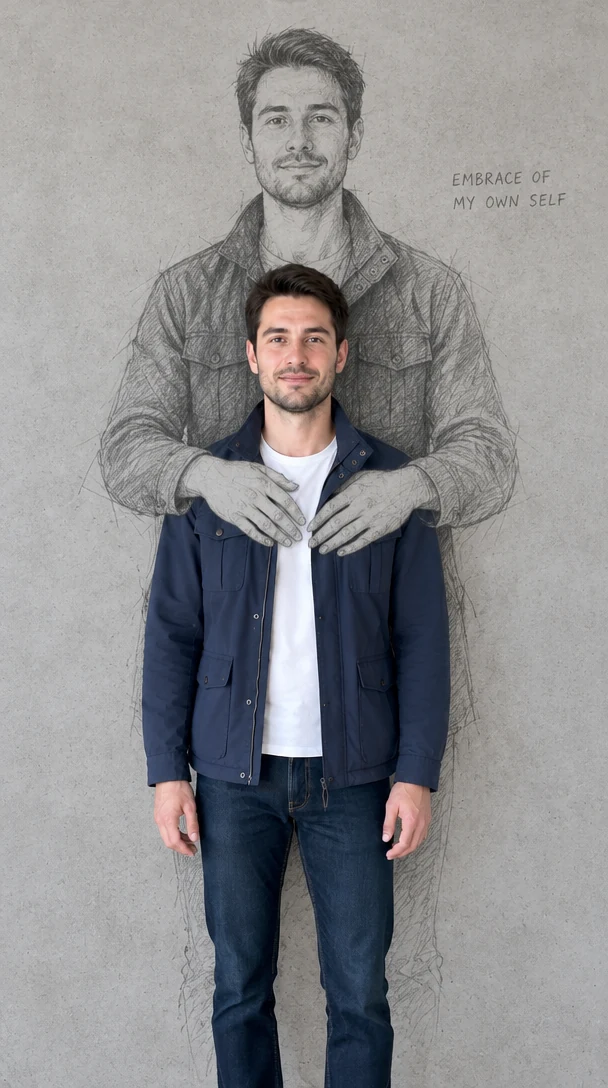
Photo used
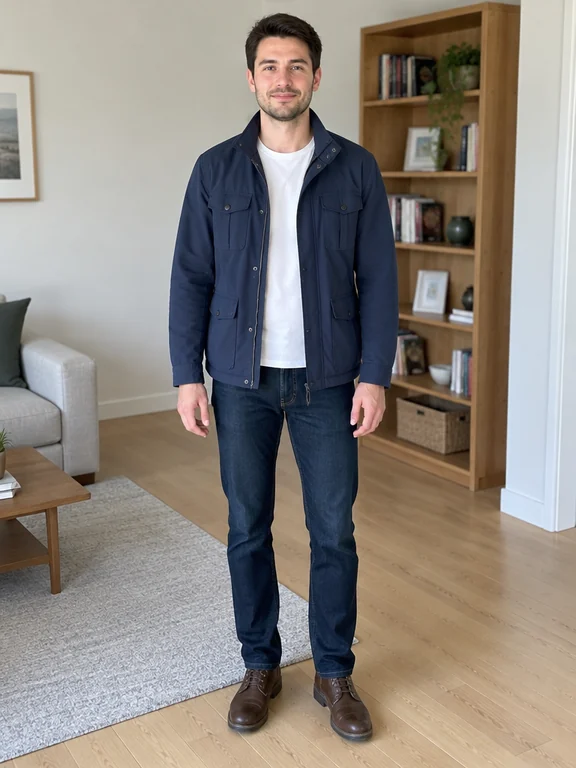
The navy jacket, the collar and the dark jeans are his; the wall gains a drawing of the same man, much taller than he is, its drawn arms coming around him.
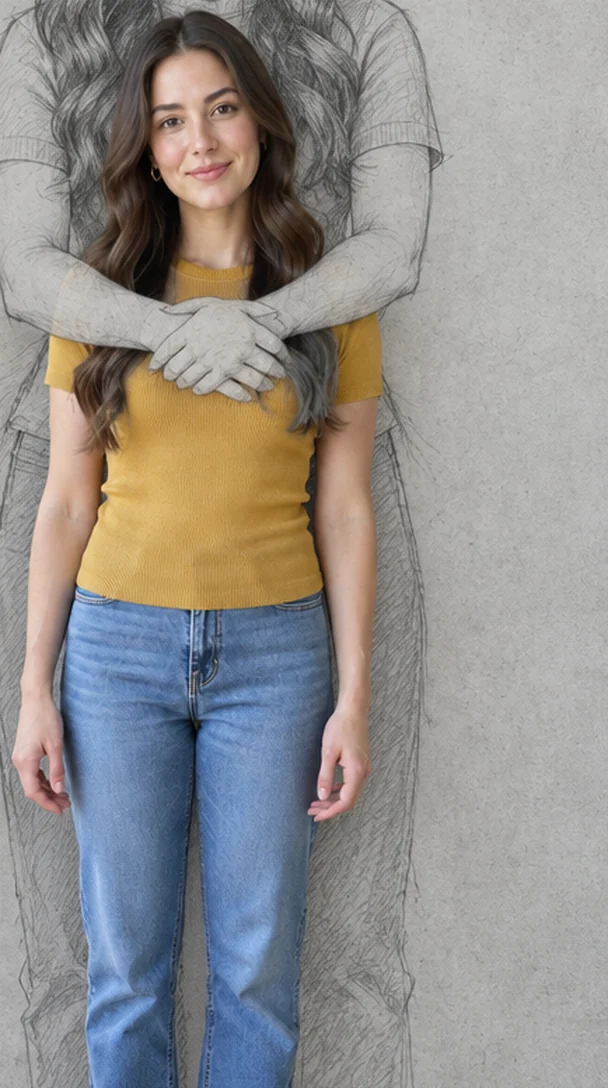
Her own arms stay at her sides while the arms around her shoulders are pencil: hatching, smudged shading and no skin.
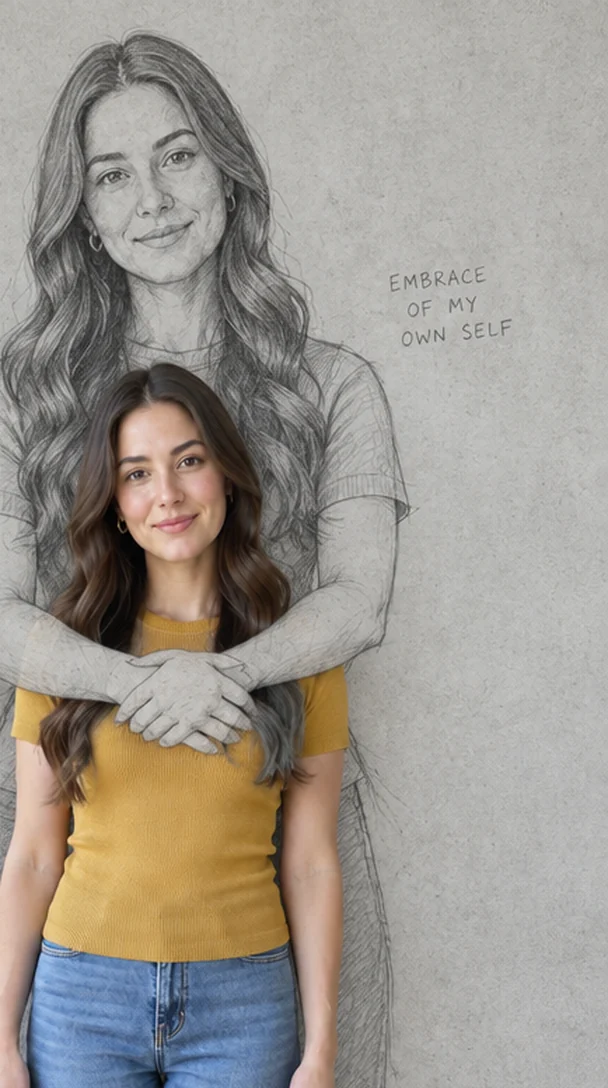
The template writes the short line beside the drawing, once. There is no text box on this page: the sentence is part of the effect.
Four different pictures answer to the word hug. This page makes the still one, where the second figure is a drawing of you.
| Hug picture | Output | Where to make it |
|---|---|---|
| Self Hug Sketch | You in colour, drawn you embracing you | This page |
| Hug your younger self | Two ages, two real people | AI image generator |
| Photo turned into a sketch | One drawing, no second figure | Any image generator |
| Self-hug video template | A moving clip | Video editors, elsewhere |
Four things to check before you keep a result. If one comes back wrong, the upload block above says which photo change helps.
The wall figure has to read as graphite. When it comes back with real skin, real colour and real fabric, it is a miss; run the photo again rather than keeping it.
Likeness is a redraw, not a copy. Compare face shape, hairline, eyebrows and any headwear; when the face drifts, a new run with the same photo often lands closer.
The arms around the shoulders are the risky part: they can pick up a third hand or slide into the real sleeves. Look for two real arms and one drawn pair; if they merge, run the same photo again rather than cropping it.
The sentence is drawn by the model, so letters can wobble, and there is no field to retype it: when the line comes back wrong, run the photo again.
Your photo supplies the person: face and features, skin tone, age, hair, headwear and the clothes in their own colours. The grey wall, the giant drawing, the embrace and the wall line come from the template.
1 photoYour photo
Supplies the person and the styling: the face and its features, skin tone, age, hair colour and hairstyle, any headscarf, hat or glasses, and the clothes in their own colours.
Works well
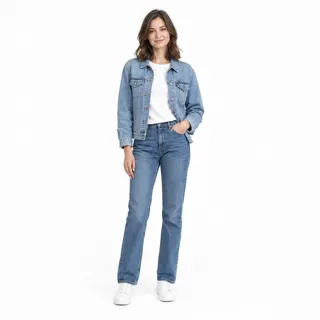 Head to shoes keeps your outfit and shoes
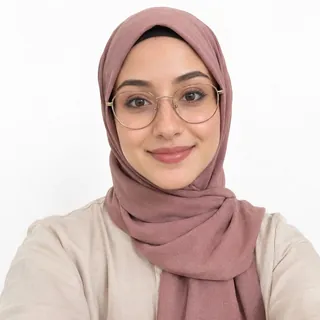 Headwear and glasses stay in the drawing
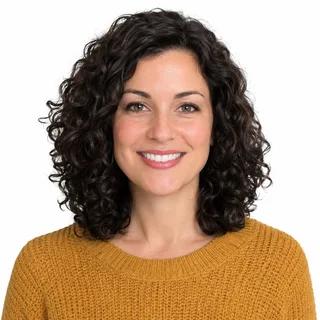 One person, whole face evenly lit
Comes back wrong
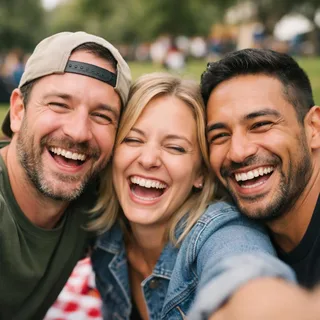 Two people in one photo
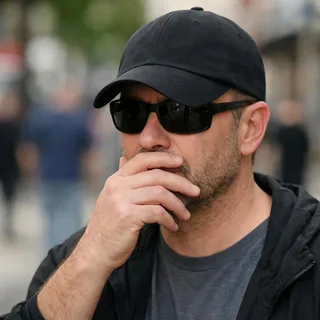 A hand or sunglasses over the face
 A strict side view
Upload one photo
One photo on the tile at the top of the page. A full-body shot gives the drawing more of your outfit to keep; a clean selfie works too.
Choose the ratio and the resolution
Choose the ratio and the resolution you want. The button shows the exact price before anything starts.
Check it and download
Check the shoulder line, the two faces and the wall line, then download the photo and post it.
People search for a prompt because the first posts put one in the caption. This page already knows the look, so there is nothing to fill in; the text below is the wording the template sends, rendered the way an editor expects it, so a copy you paste elsewhere starts from the same instructions. The notes say which parts you can change.
GPT Image 2.5 Flare edit · image 1 = your photo
Prompt length 3276
Edit image 1 into a portrait of the exact same person standing in front of a plain grey concrete wall. Keep the person instantly recognisable and keep their own styling: the same face shape and features, skin tone, age and body build, the same hair colour, hairstyle and hair length or headscarf, the same glasses, facial hair and makeup, and the same top, trousers, skirt, jacket, shoes and jewellery they wear in the photo, in their own colour; if the photo only shows part of the body, complete the rest naturally in the same style and colours. The person stands relaxed and upright facing the camera, weight even, arms hanging at their sides or one hand in a pocket, chin level, looking calmly into the lens, and they do not hug themselves. Behind them a picture of that same person, several times their size, is hand-drawn directly on the wall in graphite pencil, the way an artist sketches a portrait on a wall: rough visible pencil strokes and cross-hatching, sketchy outlines that stop and restart, unfinished edges, the pale grey wall showing through the shading, dark graphite only in the shadows, and no colour anywhere. It is clearly a drawing and never a grey photograph: no photographic skin, fabric or hair texture, no airbrushed gradients, no soft focus, no paint and no printed-poster finish; the strokes stay visible, especially along the edges of the face, hair and clothes. The sketch repeats their own hairstyle, headwear, clothes and pose. Its drawn arms come forward off the wall and wrap around the real person from behind, its drawn hands resting on their shoulders or gently crossed over their chest. The person in front stays fully photographic and in full colour with real skin and fabric detail, so the two read as one person in two media. Even, soft daylight from the front, no harsh shadows, a plain wall with no furniture and no props, and quiet space above the head and at both sides.
Framing: vertical portrait, the person from head to about the knees low in the picture, the drawn head rising well above theirs, and the whole embrace — both drawn arms and both drawn hands — inside the frame, with quiet wall above and to the sides. Wall text: on the plain wall beside the drawn figure’s shoulder, the short line "Embrace of my own self" in small, uneven pencil capitals, written once and legible.
Exactly one real person in the frame: the one in the photo. The figure behind them is a flat graphite drawing on the wall, not a second body: it has no colour and no photographic skin, hair or fabric texture, and its arms and hands are pencil lines that never turn into real arms, real sleeves or a real face. No extra arms, hands, feet, heads or bodies anywhere, and the real person keeps their own two arms where the photo has them. The drawing is clearly larger than the person, sits on the wall behind them, and repeats their own hairstyle, headwear and outfit in pencil. Keep the wall plain apart from one short handwritten line, spelled as written above: no other words, sentences, numbers, signs, posters, lettering on clothes, logos, brand marks or watermarks. Keep everyone at their real age; a child stays a child with a natural face and no makeup. Photographic detail for the person and the wall, pencil drawing for the wall figure.Name what has to stay
Face, skin tone, age, hair, headwear and clothes. Without them the redraw invents a person who happens to stand in front of a drawing.
Say the wall figure is a drawing
Graphite outline, hatching, smudged shading, no colour. Skip the medium and the second figure comes back as a real person standing behind you.
Place the embrace
Say that the drawn arms come around the real person from behind, and that the real arms stay at their sides. It is what keeps the embrace from growing extra hands.
Colour on the drawing
A second colour or a photographic face on the wall breaks the one-person-two-media idea, which is the whole effect.
A wall full of quotes
Any extra sentence on the wall invites more lettering, and every added line is another chance of a misspelling.
Group shots or self-hug poses
A photo with two people, or with arms already wrapped around yourself, leaves the model guessing who the drawing is.
Loses both
Self hug sketch trend, pencil drawing behind me, grey wall.
Holds the frame
Edit image 1 into a photo of the same person in colour in front of a plain grey wall. A much larger graphite pencil drawing of that same person on the wall behind wraps its drawn arms around them; the real arms stay at their sides. One short pencil line on the wall.
The vague line usually comes back as a person standing in front of a poster of themselves: nothing in it says pencil, and nothing says the arms have to come from the wall.
Every template works the same way: add your photos, press Generate and get a shareable video without writing a prompt.
View all effectsPrint the portrait large, cut yourself out of the wall for a sticker, or clean up a dim phone photo before you upload it.
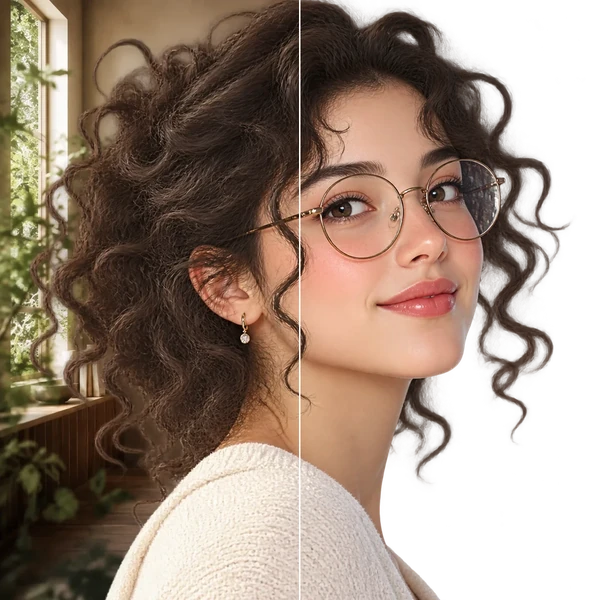
Transparent PNG or WebP with clean hair and product edges, ready for a listing or a new composition.
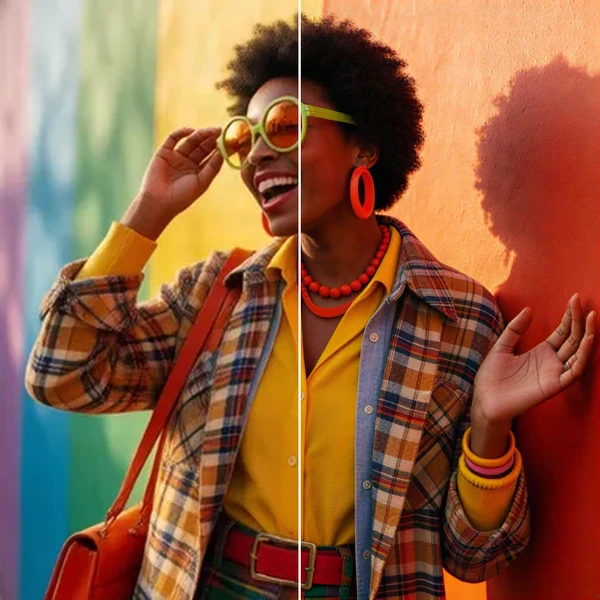
2× / 4× / 8× with recovered texture instead of smeared pixels, so a 1K draft can become a print.
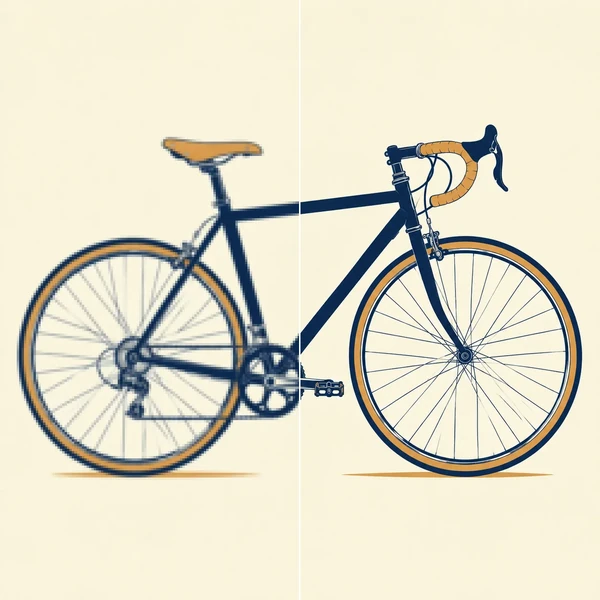
Logos, icons and flat illustrations become editable SVG that scales to any size.
Remove grain and compression artifacts from low-light photos and scans while keeping real detail.
No: this template returns one still photo per run. It does not animate the drawing, add motion or record sound, and the wall figure stays flat on the wall.
No. You do not need a sketch, a scanner or any image of a drawing: your one photo is the reference, and the wall drawing is made from it. You also do not need to pose in a hug.
A clear selfie works: it supplies your face, hair and whatever top it shows, and the parts it does not show are completed in the same style. A half-body or full-body photo keeps more of your outfit and shoes, which is the usual reason people prefer it.
Keeping what you wear is the aim: the top, jacket, trousers and shoes come from your photo, in their own colours, and the drawing repeats them in pencil. Exact details can still shift, and a photo that only shows your top half leaves the rest to the model.
It keeps them as far as a redraw can, which is why the drawing reads as you rather than as a stranger. A redraw cannot match you pixel for pixel.
Look at the shoulder line first. A third hand or a drawn arm that turns into a real sleeve comes from your own arms being close to your body in the photo; a shot with both arms relaxed and slightly away from you comes back cleaner. Re-run it rather than cropping the problem out.
No. The line is fixed in the template and there is no field for your own words, so a different sentence is out of reach here. The letters are drawn by the model and can come out uneven; re-run the photo when the line is wrong.
No. A younger-self hug puts a child and an adult in one frame, two real people at two ages. Here there is one age and one face: the figure holding you is a pencil drawing of you, and it has no colour.
Both exist, and neither is this page. The CapCut template named Hug From My Own Self animates a photo; Gemini needs a pasted prompt and runs in another app. This page is a one-click still photo on Oeneo AI: one photo in, one image per run.
9:16 is the default and fills a phone screen or a story. 1:1 suits a feed post or a print. 1:1 is generated as a square rather than cropped from a taller frame, so check both drawn arms in the result before you keep it.
No. It runs on credits with no subscription needed, and new accounts get 10 credits at signup. The price depends on the resolution you choose, and the Generate button shows the exact amount before anything is spent.
No. Results from this template stay in your account and are not shown in public galleries.
One photo in, the coloured you and the pencil you out: pick the size, check the shoulder line, and download it.