


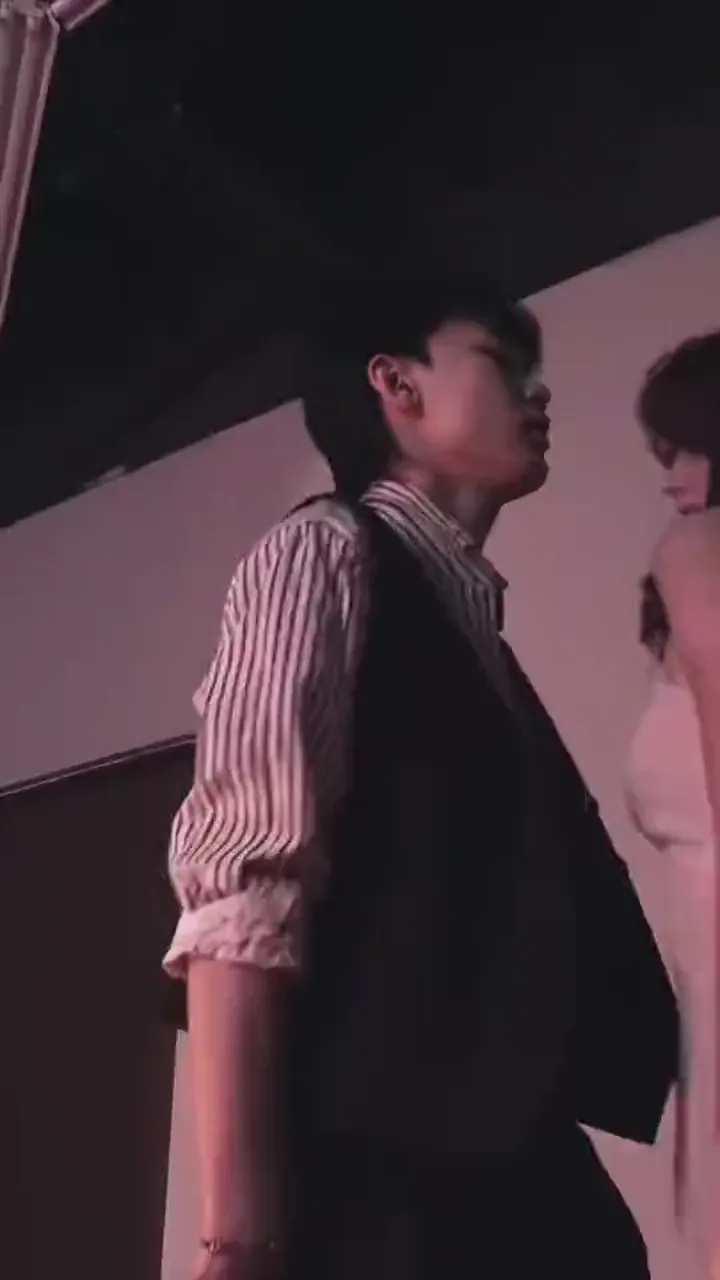
A couple
One photo from each of you, taken anywhere: the studio's pink light lands on both faces and the wide the two of you share.
Example: “Our trouble maker.”
Cast a couple or friends into the Trouble Maker duet: one photo takes the man in the striped vest, one takes the woman in the pale dress, and the pink studio, the moves and the crossing stay as performed.
PNG / JPG / WebP · up to 10 MB · at least 512px on the short side
0/2 photos
One single-person photo per dancer, full body if you have it. Photo 1 plays the man in the striped vest, photo 2 the woman in the pale dress.
Video settings
No prompt needed. Only upload photos of yourself or people who agreed to be featured; celebrity photos and film stills aren't allowed.
A Trouble Maker AI dance puts two separate photos into the K-pop Trouble Maker duet — the man in the striped shirt and black vest, and the woman in the pale dress — while the pink studio, the choreography and the camera stay as in the clip.
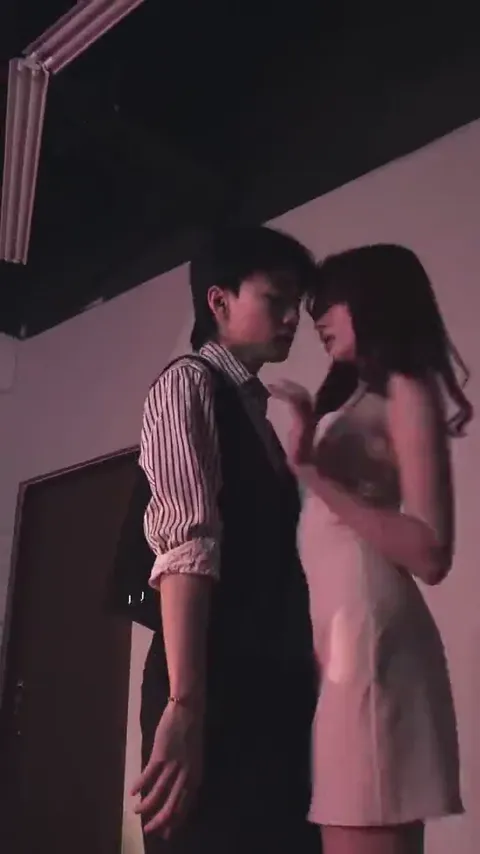
The dance itself is the 2011 HyunA and Hyunseung duet: the shoulder lean, the mirrored arm work and the trading of places were recognisable long before anyone ran them through an AI model. What is recent is the habit of casting new pairs into the same routine.
The joke of the recent wave is the unlikely duo: familiar identities performing the same recognisable duet. The Chinese re-creations from late October run across animated characters, film characters and tech figures rather than the original two performers.
It is not a dance lesson, and the mirror-practice and tutorial videos people also find for this song are a different task. Nor is this an official HyunA or Hyunseung product: the name only says which duet the photos are put into.
A Bilibili AI MV contest entry casts two animated characters in the duet; the upload shows about 4.4 million plays and is marked AI-generated.
A second Bilibili AI MV pairs two Three Kingdoms drama characters in the duet, at about 1.5 million plays.
A tech pairing — Musk and Jensen Huang — appears on Bilibili marked AI-generated, at about 353,600 plays.
More unlikely pairings follow the same format, from public figures to two chip-industry chief executives, all marked AI-generated.
Upload dates and play counts from the Bilibili pages' own display, read on 4 November 2026; the platform rounds its counts and shows dates in its own timezone, so the two are not an exact growth measurement. The dance itself dates to the 2011 HyunA and Hyunseung duet.
The 15-second duet in six stops, each with the second its shot starts on. The performers are named by what you see in the studio, not by who is in your photos.
10:00–0:02The clip starts close on the pair in the pink-lit studio: the man in the striped shirt and black vest on the left, the woman in the pale sleeveless dress on the right.
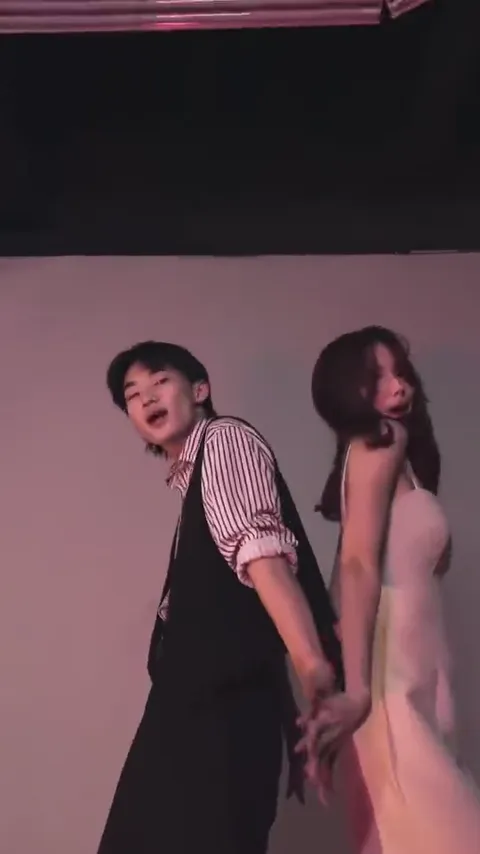 20:02–0:06
Still in the two-shot they trade the opening steps, arms mirroring each other as the hook settles in.
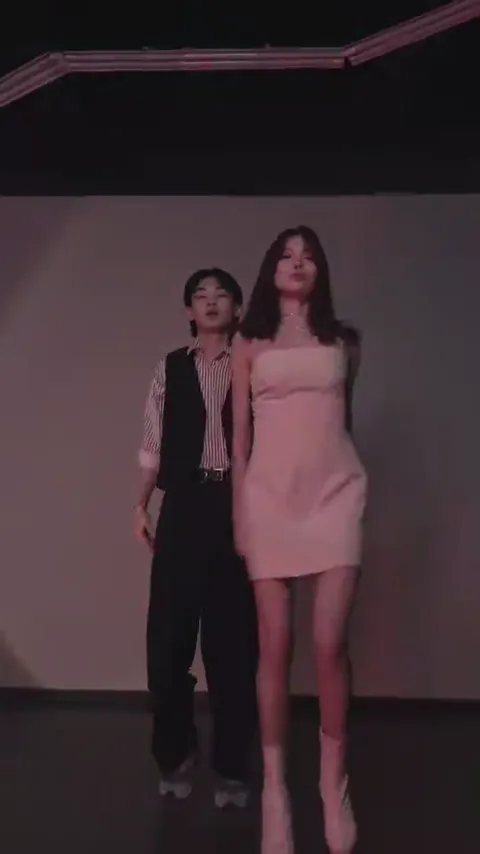 30:06–0:08
The edit opens up to the full figures and the whole routine is visible shoes to shoulders, the two stepping back into the wide.
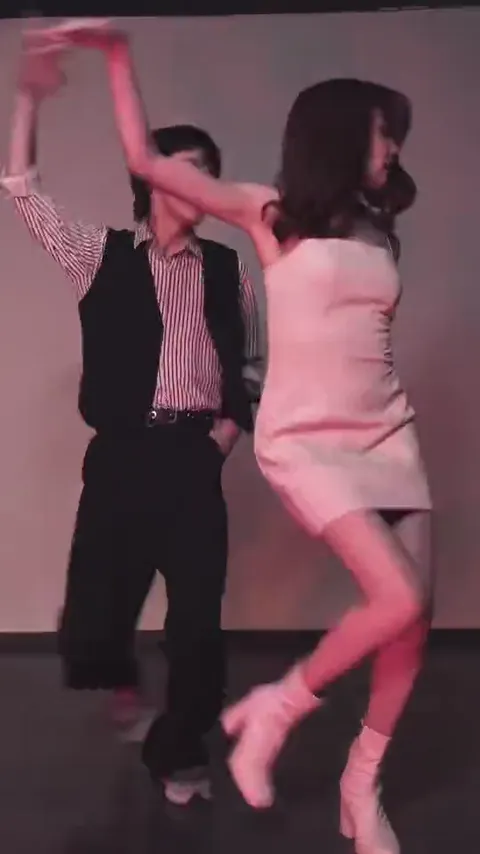 40:08–0:09
They dip into the shoulder lean and start to trade places, crossing the middle of the frame while the mirror moves keep going.
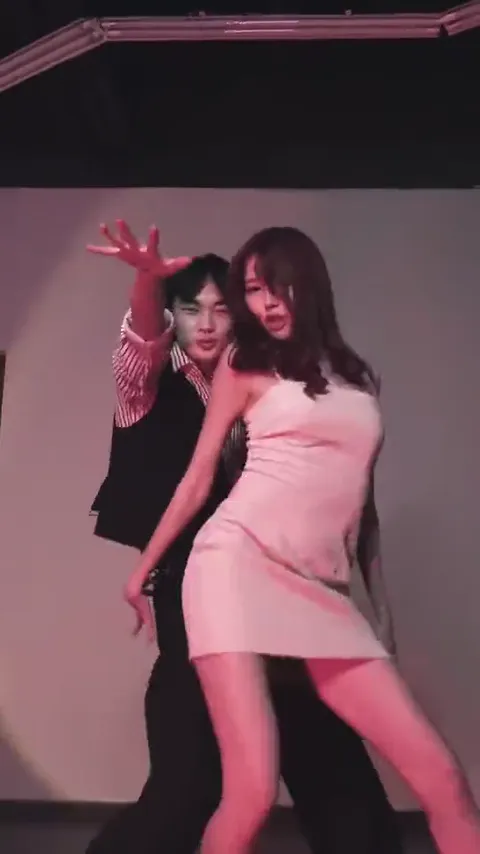 50:09–0:13
Back in close, the two settle front and back and the faces come back to the centre of the frame.
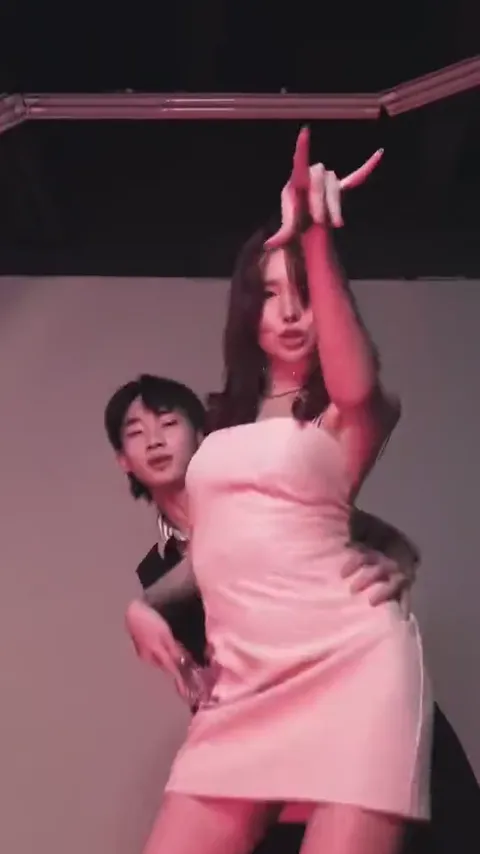 60:13–0:15
The last shot holds the pair until the clip ends.
Each photo plays one dancer: photo 1 is the man in the striped shirt and black vest, photo 2 the woman in the pale dress. There is no prompt to write.
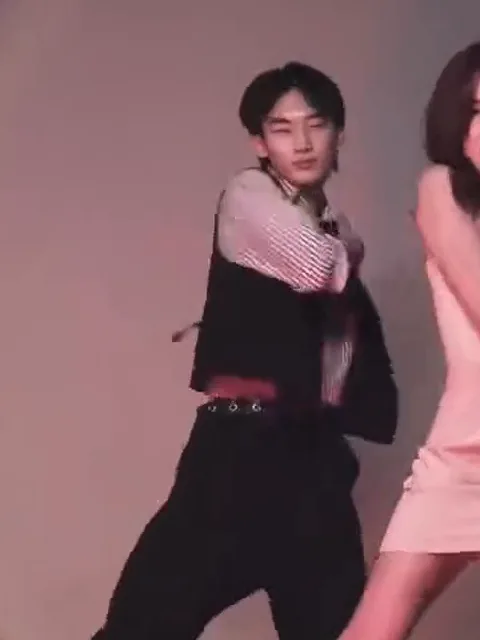
Photo 1Man
Face, hair and build for the man: striped shirt, black vest, dark trousers.
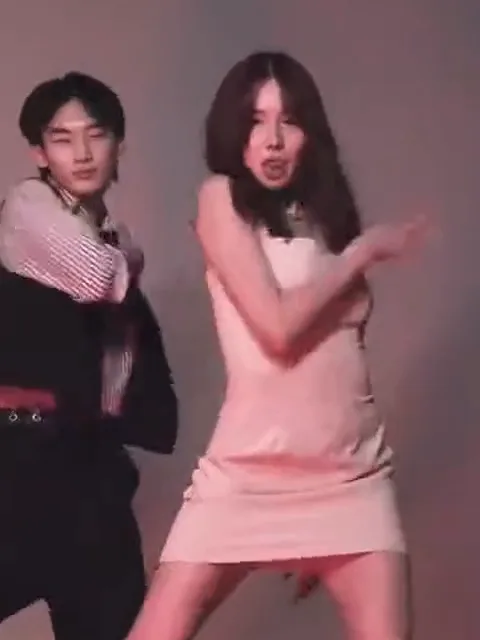
Photo 2Woman
Face, hair and build for the woman: pale sleeveless mini dress, white boots.
Works well
 One person, face clear
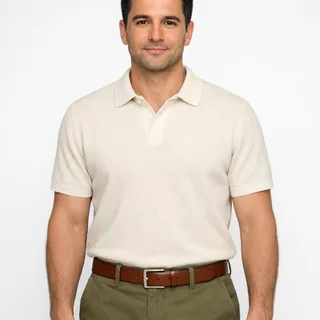 Chest up or waist up
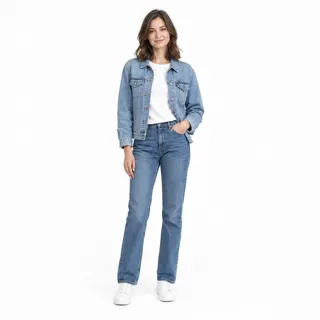 Head to shoes if you have it
Avoid
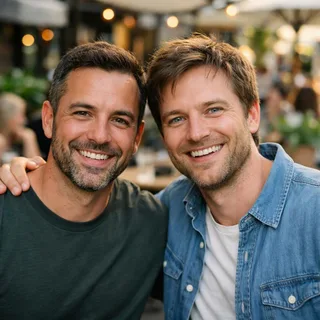 Two people in one photo
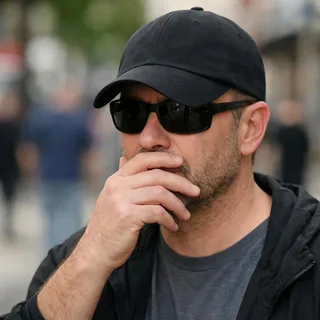 A hand over the face
 Blurry, dark or tiny
Add both dancers
Photo 1 is the man, photo 2 the woman; both go in before Generate opens.
Click Generate
The button shows the exact price for the resolution you pick before you start.
Post it
The download is the finished duet, ready to post.
This duet is built for two people, so a pet photo has no dancer to play.
Each photo follows its dancer, not a side of the frame: when the two cross mid-routine, the man stays the man and the woman stays the woman. Each of you keeps your own part for the whole clip.
One photo from each of you, taken anywhere: the studio's pink light lands on both faces and the wide the two of you share.
Example: “Our trouble maker.”
No photo together needed: two separate portraits make the partner-in-crime duet, and the routine never asks who the two of you are.
Example: “Partner in crime, one dance at a time.”
Two character references can play the two dancers, though complex proportions may drift through the fast crossing and the close-up.
Example: “Two OCs, one routine.”
Two copyable prompts: a Kling video-edit prompt that recasts the duet clip itself, and a Seedance prompt that re-shoots the routine from two photos. On this page the prompt is already set, so the photos are all you add.
Kling 4.0 video edit
Prompt length 1001
Use @Video1 as the reference for the whole Trouble Maker duet. Replace only the man in the striped shirt, black vest and black trousers with the person in @Image1, and the woman in the pale sleeveless mini dress and white boots with the person in @Image2.

Preserve each person's face, hairstyle, hair colour, skin tone, body proportions and the outfit from their own photo. Transfer each original dancer's body motion, poses, expressions, gaze and timing to their replacement, frame by frame: the close two-shot, the mirrored arm moves, the cut to full body, the shoulder lean, the crossing, the close-up with her in front and the final hold.

@Image1 stays on the man and @Image2 stays on the woman in every shot, including the crossing where they trade sides and the close-up where she stands in front of him.

Keep the pink-lit studio, the camera, the framing, every cut, the lighting, the pacing and the audio of @Video1 unchanged. No swapped or blended faces, no extra dancers, no text or logos.Name both dancers by outfit
Striped shirt and black vest for the man, pale mini dress for the woman: the outfits stay with each dancer when they cross, the sides do not.
Pin the cast through the crossing
One sentence keeping @Image1 on the man and @Image2 on the woman in every shot stops the faces swapping where they trade places.
List the moves in order
Mirror arms, shoulder lean, crossing, close-up: naming the routine keeps the edit from improvising a new dance.
“Do the Trouble Maker dance”
The song name tells the model nothing about the moves; attach the clip and keep its choreography instead.
A photo of the two of you together
Two faces in one image leave the model to split them, and they often blend; use one photo per dancer.
A new studio or a wide frame
A different room, a horizontal frame or a longer cut makes the model re-shoot the duet and drop the moves people recognise.
Asks for a new dance
Make us do the Trouble Maker dance in a pink studio.
Pins each photo to an outfit
Use @Video1. Replace the man in the striped vest with @Image1 and the woman in the pale dress with @Image2 in every shot; keep the moves, the crossing and the clip's audio.
The first asks for a new dance and never says which photo is which. The second edits the clip in place, ties each photo to an outfit and keeps the sound.
Every template works the same way: add your photos, press Generate and get a shareable video without writing a prompt.
View all effectsFAQ
No. Each run costs credits at the price of the resolution you pick, and the button shows that number before you generate. New accounts start with 10 credits.
Yes. The template recasts the built-in clip, so the track that plays in it is the track in your video. It is not a new recording or a cover.
Yes. The slots are named after the two dancers in the clip, but any two people can fill them, so two men or two women work the same way; the choreography and the studio come from the clip.
Yes. The two roles do not require a romantic relationship, so two friends' photos work the same way as a couple's; the choreography and the studio come from the clip.
No. The template takes two separate single-subject photos, one per dancer, so you never need a picture of the two of you in the same frame.
No. This is a fixed template rather than a general Trouble Maker AI video generator: the clip, the camera and the sound are already set, so there is no prompt field. The prompts above are for running the duet in another tool.
Crossings and occlusion are where a model confuses the two roles. Sharp, single-subject photos and checking the crossing and the close-up keep the faces apart, but the template cannot promise they never swap.
Character references are a possible use, but complex proportions and stylised faces may drift through the fast crossing and the close-up. A clear, full-body reference for each is the safer start, and there is no promise that every art style holds up.
No. The recast follows the built-in clip: 15 seconds and a 9:16 vertical frame, with no length or aspect setting. Resolution is the only choice on offer.
Both are on offer and nothing else changes with them: same clip, same 9:16 frame. The difference in price is on the button before you generate.
The dance itself is older — the 2011 HyunA and Hyunseung duet — and what is recent is the wave of AI re-creations casting new pairs from late October 2026. This page makes a photo-based video; it is not a mirrored dance lesson.
No. Oeneo AI has no official association with HyunA or Hyunseung; the name only says which duet the two photos go into.
Trouble Maker AI Dance
Add the two photos, check the price and generate: the pink studio, the mirror moves and the crossing are already in the clip.